

A common misconception is that a crypto wallet is secure once its private key is secure. Private-key protection is essential, but it is not the whole security model. In DeFi, a wallet can retain control of its key while simultaneously granting a smart contract permission to move particular tokens. That permission may remain active long after a swap, liquidity deposit, or farming transaction is complete.
Consider a US-based DeFi user who moves between Ethereum, Arbitrum, Base, and Polygon. They approve a token for a decentralized exchange on each network, deposit another asset into a lending market, and later connect to a new protocol through a browser wallet. Nothing appears unusual: the wallet still requires transaction signatures, and the balances are visible. Yet the user may have accumulated a collection of allowances across several independent chains. The security problem is not one approval. It is the growing, often forgotten permission surface.
The Mental Model: Ownership Is Not the Same as Permission
Most Ethereum-compatible tokens follow a standard pattern in which a holder authorizes a spender, usually a smart contract, to transfer tokens on the holder’s behalf. This authorization is called an allowance. A decentralized exchange may need it before performing a swap; a lending protocol may need it before accepting collateral. The wallet holder signs the approval, but the contract later uses the allowance when the relevant function is called.
This creates an important distinction. The wallet controls the signing key, while the token contract records a separate relationship between the token owner and an approved spender. Revoking an allowance does not change ownership of the wallet, and protecting the seed phrase does not automatically remove approvals. These are different control layers.
The practical consequence is that a malicious or compromised contract can become a route to loss without stealing the private key directly. If an approval is unlimited, the contract may be able to request transfers of the approved token up to the allowance’s remaining amount. Whether that transfer succeeds depends on the token design, the contract’s code, and the chain’s execution rules, but the authorization itself is a meaningful exposure.
Approvals are not inherently unsafe. They are a necessary coordination mechanism for much of DeFi. The mistake is treating them as harmless administrative details. A useful analogy is a recurring bank authorization: signing it may be reasonable for a trusted service, but leaving it active forever changes the consequences if the service, its account, or the surrounding process is compromised.
Why Multi-Chain Use Makes the Problem Harder
Token approval management becomes more difficult across chains because the same wallet address can exist on multiple networks while each network maintains its own state. An approval granted on Ethereum does not automatically authorize the same spender on Arbitrum or Base. That separation is protective in one sense, but it also fragments the user’s view of risk.
A user may remember approving a token “for the exchange,” while the actual record is more specific: a particular token contract, on a particular chain, authorized a particular spender address. Two contracts can have similar names, serve similar interfaces, or appear in the same wallet workflow while remaining technically unrelated. Conversely, a familiar protocol may use different contracts for different products or networks.
This is where a multi-chain wallet interface can improve understanding, but no interface can remove the underlying complexity. Good wallet hygiene requires the user to ask four questions whenever an approval appears:
- Which chain is involved?
- Which token contract is being authorized?
- Which spender address receives the permission?
- How much can that spender move, and for how long?
The fourth question is frequently overlooked. An approval for a fixed amount is usually narrower than an effectively unlimited approval. An approval that expires, where supported by the token and protocol design, may reduce the duration of exposure. However, smaller or shorter approvals can also create more transactions, more network fees, and more opportunities for user error. Security is therefore not achieved by one universal setting; it is managed through proportionality.
A Case Study in Permission Creep
Imagine a user who begins with a simple swap. The decentralized exchange asks for permission to spend a stablecoin. The user approves a large amount because doing so avoids another approval later. A week afterward, the user deposits the same stablecoin into a lending market, authorizing a different contract. Later, a bridge interface requests another approval on a different network.
None of these actions necessarily indicates an attack. They may all be ordinary DeFi operations. The risk emerges through accumulation. The user now has multiple permissions, some associated with contracts that are rarely used, perhaps no longer needed, and difficult to distinguish from one another when reviewing the wallet quickly.
Suppose one front end is later compromised, one protocol contract contains an exploitable flaw, or one spender address is not the contract the user believed it was. The allowance can expand the impact of that failure. The wallet’s security has become partly dependent on the continuing integrity of every approved spender, not merely on the user’s ability to reject a new transaction.
This illustrates a non-obvious point: transaction security and permission security are related but not identical. Reviewing a transaction asks, “What will happen now?” Reviewing an approval asks, “What authority will remain after this transaction?” The second question has a longer time horizon and is often more important after the immediate DeFi action is forgotten.
How to Build a Practical Approval-Management Routine
Before approving, inspect the transaction rather than relying only on the website’s button label. Check the network, token, spender, and amount. If the requested allowance is much larger than the amount needed for the current action, pause and determine whether convenience justifies the broader permission. A legitimate protocol may request a high allowance for usability, but legitimacy should be verified independently from the size of the request.
After completing a one-time interaction, consider whether the allowance still serves a purpose. If not, revoke it through a trusted contract-interaction tool or wallet workflow. Revocation is itself an on-chain transaction, so it requires a network fee and a valid signature. On some tokens and protocols, changing an allowance may require first setting it to zero and then setting a new amount; this can increase cost and operational complexity.
Review each chain separately. A monthly or quarterly audit can begin with the networks the user actually uses, rather than attempting to monitor every possible chain. Prioritize permissions connected to high-value assets, unfamiliar spenders, abandoned protocols, and allowances that are effectively unlimited. The goal is not to eliminate every approval. It is to reduce unnecessary authority while preserving a manageable workflow.
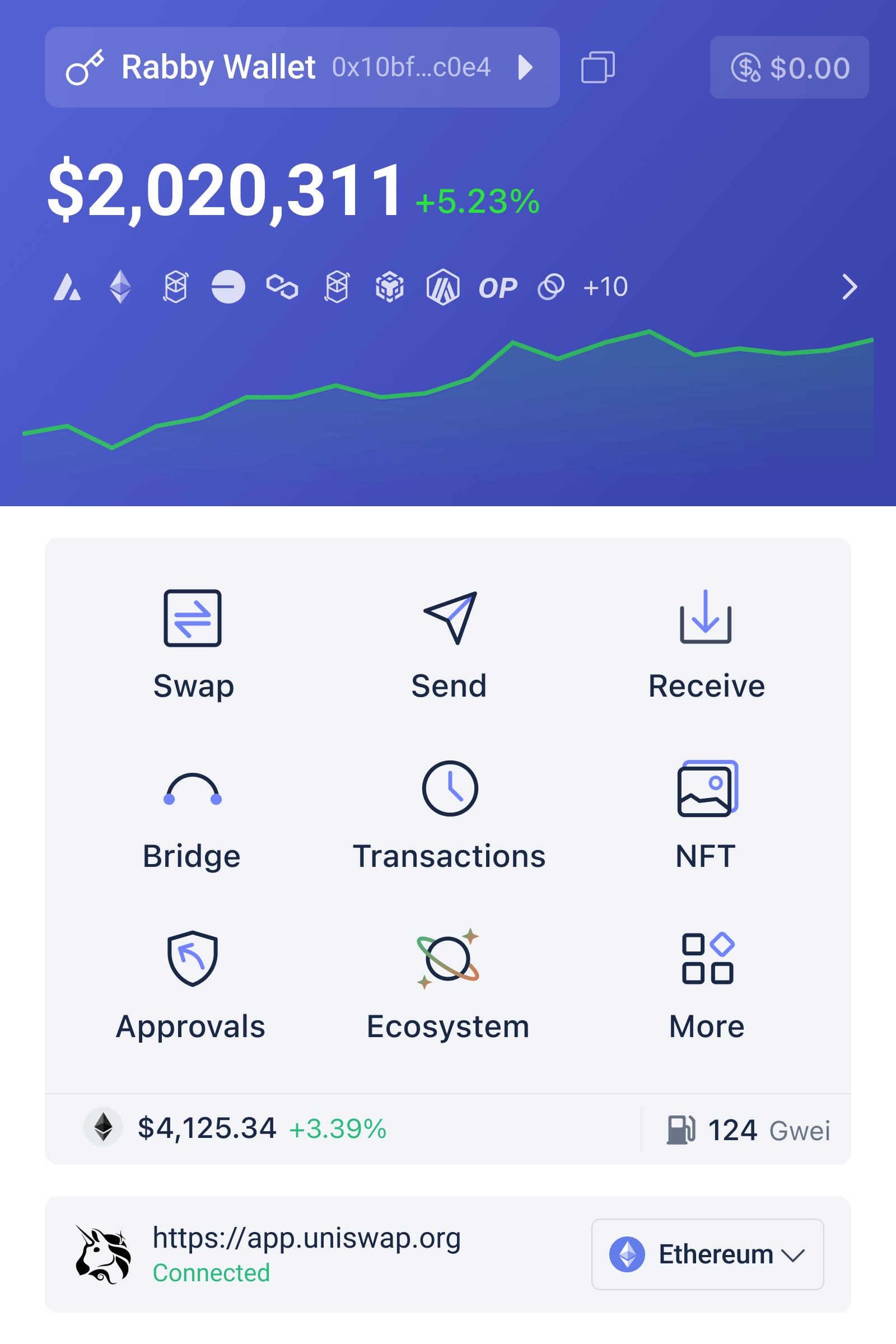
For users installing a browser wallet, the rabby wallet extension can be part of a broader verification routine: use the wallet to inspect the network and transaction context, but continue to validate the protocol, domain, and requested permission independently. A wallet can surface warnings and make signing more intelligible; it cannot determine with certainty whether a new protocol will remain trustworthy in the future.
What Wallet Warnings Can and Cannot Do
Modern wallets can help by identifying suspicious transaction patterns, displaying contract information, highlighting simulation outcomes, and making approval requests more visible. These features reduce the chance that a user signs an action without understanding its immediate effects. They are especially valuable in a multi-chain environment, where network context can otherwise be easy to miss.
There are limits. A warning system may not recognize a novel exploit, a compromised but previously reputable protocol, or a malicious contract that behaves safely during simulation and changes later. Contract names and website branding are also not proof of identity. A familiar interface can point to an incorrect contract, and an unfamiliar interface can interact with a legitimate contract. The address and the actual call data remain more informative than appearance alone.
Simulation has a similar boundary. It can show what a transaction appears likely to do under particular conditions, but it is not a guarantee about every future state or every external dependency. DeFi contracts are composable: one transaction may rely on tokens, price feeds, bridges, permission systems, and other contracts. Security tools improve decisions; they do not replace judgment.
A Reusable Risk Framework
A simple way to prioritize approvals is to evaluate three dimensions: value, authority, and duration. Value asks how much could be affected. Authority asks what the spender can do, such as transfer a token, move a broad asset balance, or interact with a protocol position. Duration asks how long the permission remains active.
High value, broad authority, and indefinite duration describe the permissions that deserve the closest scrutiny. Lower-value, narrowly scoped, short-lived permissions may be reasonable for routine use. This framework is not a mathematical risk score, but it forces a useful comparison between convenience and exposure.
Another practical distinction is between hot and strategic funds. A wallet used frequently for experimentation should not necessarily hold the same assets as a wallet reserved for long-term savings. Separating operational activity from higher-value holdings can limit the consequences of a bad approval or compromised application. It does not make the active wallet safe by itself, but it reduces the amount exposed to everyday interaction.
Users should also beware of a false sense of security after revocation. Revoking one allowance does not undo a completed transfer, repair a malicious signature already authorized, or remove permissions granted to a different spender on another chain. It is a corrective action, not a rollback of history. If an asset has already moved unexpectedly, the priority becomes incident containment: stop interacting with the suspected application, preserve transaction details, and assess every related account and chain.
What to Watch as DeFi Interfaces Mature
If wallet interfaces increasingly present permissions as durable security objects rather than one-time transaction details, users may make better decisions. The most useful direction would be clearer cross-chain views, understandable spender identity, allowance age, expiration status, and warnings that distinguish a routine approval from a broad authorization.
That improvement depends on more than interface design. Token standards, protocol architectures, wallet support, and user habits all influence whether granular permissions are practical. A highly restrictive approval policy may be safer in theory but burdensome in practice if it creates excessive fees and repeated prompts. The likely best outcome is not maximum restriction everywhere, but more deliberate permissions matched to the value and purpose of each DeFi action.
For now, the durable lesson is straightforward: treat token approvals as standing permissions. Inspect them before signing, review them after use, and audit them across every chain where the wallet operates. Private-key security protects the door to the wallet. Approval management determines which applications may be allowed through it.
Frequently Asked Questions
Does revoking a token approval remove the token from my wallet?
No. Revoking an approval removes or reduces a spender’s authorization to transfer the token on your behalf. It does not delete the token, transfer ownership, or reverse a transaction that has already occurred.
Does an approval on Ethereum apply to the same wallet on another chain?
Generally, no. Each blockchain maintains its own contract state, so an approval on Ethereum is separate from an approval on Arbitrum, Base, Polygon, or another network. Review permissions chain by chain.
Are unlimited approvals always dangerous?
Not necessarily, but they create broader and potentially longer-lasting exposure than a limited approval. The decision depends on the spender’s trustworthiness, the asset’s value, the protocol’s purpose, and how actively the permission will be used.
Can a wallet warning guarantee that a DeFi transaction is safe?
No. Warnings and simulations can reveal important risks and clarify what a transaction appears to do, but they cannot guarantee the future behavior of a contract, website, oracle, bridge, or protocol. They should support independent verification rather than replace it.

Lascia un commento