


Le forze di centro sinistra hanno condiviso sin dai tempi della famosa intervista di Berlinguer a Giampaolo Pansa la presenza italiana nella NATO, ma hanno sempre criticato (giustamente) l’eccessiva predominanza politica e militare degli Stati Uniti all’ interno dell’Alleanza.
Oggi la situazione è cambiata. E’ vero che nel comunicato congiunto del recente vertice tra il Presidente Trump e Giorgia Meloni a Washington si ribadisce solennemente l’impegno degli Stati Uniti e dell’Italia a favore della NATO.
United States – Italy Joint Leaders’ Statement.
| United States – Italy Joint Leaders’ StatementPresident Donald J. Trump and Prime Minister Giorgia Meloni held their first official meeting yesterday in Washi… |
Tuttavia i segnali di un minore impegno degli Stati Uniti sono più che evidenti. Ciò si inquadra nel contesto di un indebolimento complessivo degli Stati Uniti nell’ arena internazionale
dovuto soprattutto alle ondivaghe politiche protezioniste di Trump nonché alle tensioni che nelle ultime settimane hanno segnato il Pentagono, il Dipartimento di Stato e lo stesso Consiglio di Sicurezza Nazionale.
Quale occasione migliore per aumentare il peso politico, militare e finanziario dell’ Europa nell’ alleanza atlantica?
Ma non è così. Il PD per il timore di essere scavalcato da Giuseppe Conte ha scelto una posizione ambigua. È indubbio che le pessime modalità con cui Ursula Von Der Layen ha comunicato il potenziamento della difesa europea hanno avuto un effetto boomerang.
Ma un errore di comunicazione non può giustificare l’assenza di una politica lungimirante. Di fronte alle inedite incognite americane e alle persistenti minacce di Russia, Iran, Corea del Nord e Cina (ribadite in questi giorni dal COPASIR presieduto da Lorenzo Guerini)
Cosa c’è nel radar dell’intelligence italiana? La risposta nella relazione del Copasir – Formiche.net il PD e tutta l’opposizione dovrebbero aprire una discussione seria allo scopo di definire una volta per tutte una strategia efficace in materia di sicurezza senza lasciare questo tema cruciale per la nostra libertà e la nostra democrazia al monopolio della destra.
In queste ultime ore le indiscrezioni sulla presunta decisione di Pechino di inviare d’urgenza al Pakistan i missili aria-aria a lungo raggio (i PL-15) sembrano indicare un pericoloso segnale di escalation rispetto alle tensioni esplose in Kashmir.
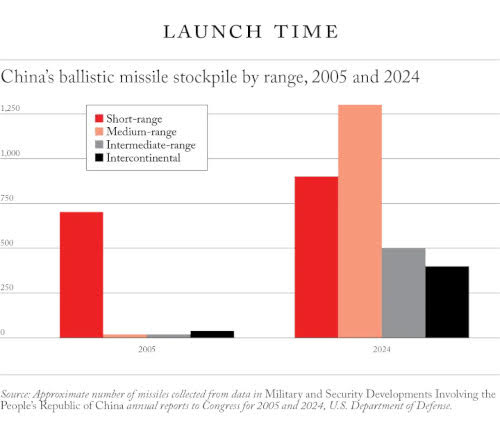
China rushes PL-15 missiles to Pakistan amid India tensions . E comunque al di là della contingenza il grafico pubblicato sul numero appena uscito di Foreign Affairs dimostra inequivocabilmente come negli ultimi 20 anni la Cina abbia perseguito con pervicacia una politica di riarmo.
https://cdn-live.foreignaffairs.com/sites/default/files/styles/_webp_720_max_width/public/images/2025/04/09/10_Lim-Fearon_CHART_1.png.webp?itok=HoPoYEKt.
Il paradosso é che nessuno parla del riarmo cinese mentre in tanti criticano quello europeo che in realtà rappresenta il primo vero tentativo di riequilibrare gli impegni militari tra Europa e Stati Uniti all’interno della NATO.
La prima cosa da chiarire é che la spesa effettivamente proposta dalla UE é di 150 miliardi (e non 800 – ipotesi puramente teorica,ma continuamente sbandierata).
La seconda osservazione é che i 150 miliardi sono vincolati al
common procurement che rappresenta un primo tassello della difesa comune creando le condizioni per una interoperabilità dei sistemi di difesa degli Stati membri della UE. Non solo, ma vengono anche specificati gli ambiti strategici a cuo destinare le risorse a partire dalla difesa delle infrastrutture civili e dalla cybersecurity, ecc.
Si tratta ovviamente di un primo passo, ma nella direzione giusta. Il “pilastro europeo” della NATO non deve restare una formula vuota, utile soltanto per le conferenza stampa.
Gli Stati membri della UE possono contare di più all’ interno dell’ Alleanza Atlantica solo se progettano e realizzano un piano pluriennale ben articolato sulla base di strutture, apparati, ruoli e gerarchie ben definite.
Non sarà un processo facile perché si tratta di superare gradualmente l’ attuale organizzazione in cui i 23 paesi UE danno ciascuno il proprio contributo alla NATO su base individuale.
L’ acquisto congiunto costringe ad un cambio di direzione, ma il cammino da fare e’ ancora molto perché occorre passare dall’ idea di un pilastro europeo della NATO ad un progetto esecutivo.
Su questa prospettiva il Ministro Guido Crosetto potrebbe avviare in parlamento un confronto con le opposizioni. “Roma non è stata fatta in un giorno”… e neppure l’euro.
Marco Mayer e Valeria Fargion
Why it is urgent to build the European pillar of NATO
Article by Marco Mayer and Valeria Fargion
April 27, 2025 9:02 AM
The center-left forces have shared the Italian presence in NATO since the time of Berlinguer’s famous interview with Giampaolo Pansa, but have always criticized (rightly) the excessive political and military predominance of the United States within the Alliance.
Today the situation has changed. It is true that in the joint statement of the recent summit between President Trump and Giorgia Meloni in Washington the commitment of the United States and Italy to NATO is solemnly reaffirmed. Joint statement by the leaders of the United States – Italy .
However, the signs of a reduced commitment by the United States are more than evident. This is part of an overall weakening of the United States in the international arena due above all to Trump’s wavering protectionist policies as well as the tensions that in recent weeks have affected the Pentagon, the State Department and the National Security Council itself.
What better opportunity to increase the political, military and financial weight of Europe in the Atlantic alliance?
But that is not the case. The PD, for fear of being overtaken by Giuseppe Conte, has chosen an ambiguous position. There is no doubt that the terrible ways in which Ursula Von Der Leyen communicated the strengthening of European defense had a boomerang effect.
But a communication error cannot justify the absence of a far-sighted policy. Faced with the unprecedented American unknowns and the persistent threats from Russia, Iran, North Korea and China ( reiterated in recent days by COPASIR chaired by Lorenzo Guerini), the PD and the entire opposition should open a serious discussion with the aim of defining once and for all an effective strategy on security without leaving this crucial issue for our freedom and our democracy to the monopoly of the right.
In recent hours, the rumors about Beijing’s alleged decision to urgently send long-range air-to-air missiles (PL-15) to Pakistan seem to indicate a dangerous sign of escalation with respect to the tensions that have exploded in Kashmir. And anyway, beyond the contingency, the graph published in the recently released issue of Foreign Affairs unequivocally demonstrates how over the last 20 years China has obstinately pursued a policy of rearmament.
The paradox is that no one talks about Chinese rearmament while many criticize the European one, which in reality represents the first real attempt to rebalance military commitments between Europe and the United States within NATO.
The first thing to clarify is that the expenditure actually proposal by the EU is 150 billion (and not 800 – a purely theoretical hypothesis, but continually flaunted).
The second observation is that the 150 billion are tied to common procurement which represents a first step towards common defence by creating the conditions for interoperability of the defence systems of the EU Member States. Not only that, but the strategic areas to which the resources will be allocated are also specified, starting from the defence of civil infrastructure and cybersecurity, etc.
This is obviously a first step, but in the right direction. The “European pillar” of NATO must not remain an empty formula, useful only for press conferences.
The EU Member States can count more within the Atlantic Alliance only if they design and implement a well-structured multi-year plan based on well-defined structures, apparatuses, roles and hierarchies.
It will not be an easy process because it involves gradually overcoming the current organisation in which the 23 EU countries each make their own contribution to NATO on an individual basis.
Joint procurement forces a change of direction, but there is still a long way to go because it is necessary to move from the idea of a European pillar of NATO to an executive project.
On this perspective, Minister Guido Crosetto could start a debate with the opposition in parliament. “Rome was not built in a day”… and neither was the euro.
Mark Mayer and Valeria Fargion

Lascia un commento